casey.berlin · the front door
Someday is where you keep putting the work you actually care about.
I believe in staying human.
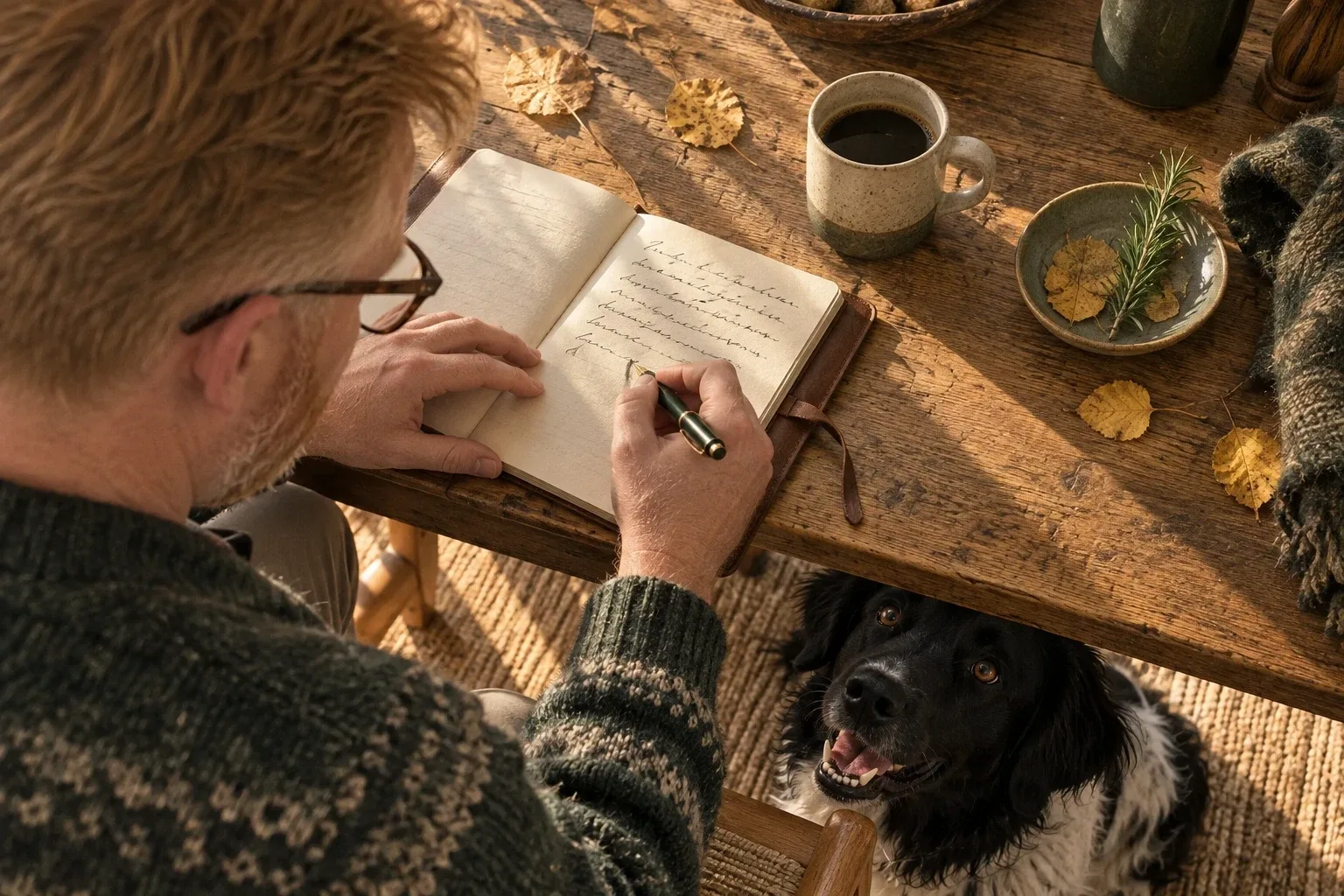
From the manifesto
Here's what I see.
People buried in tools they barely use. Screens that want attention all day. The same work typed in twice. Meanwhile the things that matter get pushed to someday.
Here's what I believe.
I believe technology can step further back. Fewer interfaces I must interact with. The end is staying human, and time is what I hope it leaves.
Here's what I hope.
Time is the one thing nobody can manufacture. If tomorrow goes the way I hope, people go home on time. So do I. That's not a business outcome. That's a life outcome.
in plain words
I'm Casey Romkes, a product engineer in Brandenburg, an hour east of Berlin. I work with people buried in tools they barely use. My job is to take things away until what's left does the job, and the time comes back. I work one to one, and bring in specialists when the work needs them.
What does Casey Romkes do?
I talk with the people involved, and we define the problem together. Then we decide what is worth building, and what to leave out. Often that is a thin layer on the tools you already pay for, not another system with its own admin panel. You get working software you can click, usually within weeks, and your people can keep it running after I've gone home. Work is quoted as a fixed price before it starts, from a spec you've read. Never by the hour.
Where do you start with AI?
Not with a tool. Start with the work you already have and the knowledge your team carries in their heads. Pick one narrow, tedious task, take it off someone's plate end to end, and see what you learn. Choose the platform after that, if at all.
What happens when we sit down together?
I listen first. Not with a framework, not with a checklist. I sit with you until I can see where your time is going. What you get back isn't a slide deck and isn't a six-month plan. It's a short spec in plain language: what we build, what we leave out, what it costs and when it's done.
from the field journal
- We've been here before Part 2 of The Personal OS: sixty years of computing swinging between someone else's machine and your own, from time-sharing terminals to MCP, and why the centre always comes back.
- The abbot who had it printed Every tool that folded several jobs into one person gave real power and hid a risk. From Trithemius to the London Whale to AI-built software, for the people who sign off on it.
- My best work happened in the bathtub The OS stopped being the point. Part 1 of The Personal OS, on describing the work instead of operating software, and the people routing around what they were handed.
The Brief Pause
A letter, about once a month. One essay on the way technology quietly reshapes ordinary life, and sometimes on nothing of the sort. No tips, no frameworks, nothing you need to act on before Monday.
Subscribe on LinkedInThe workshop is at cdit-works.de →