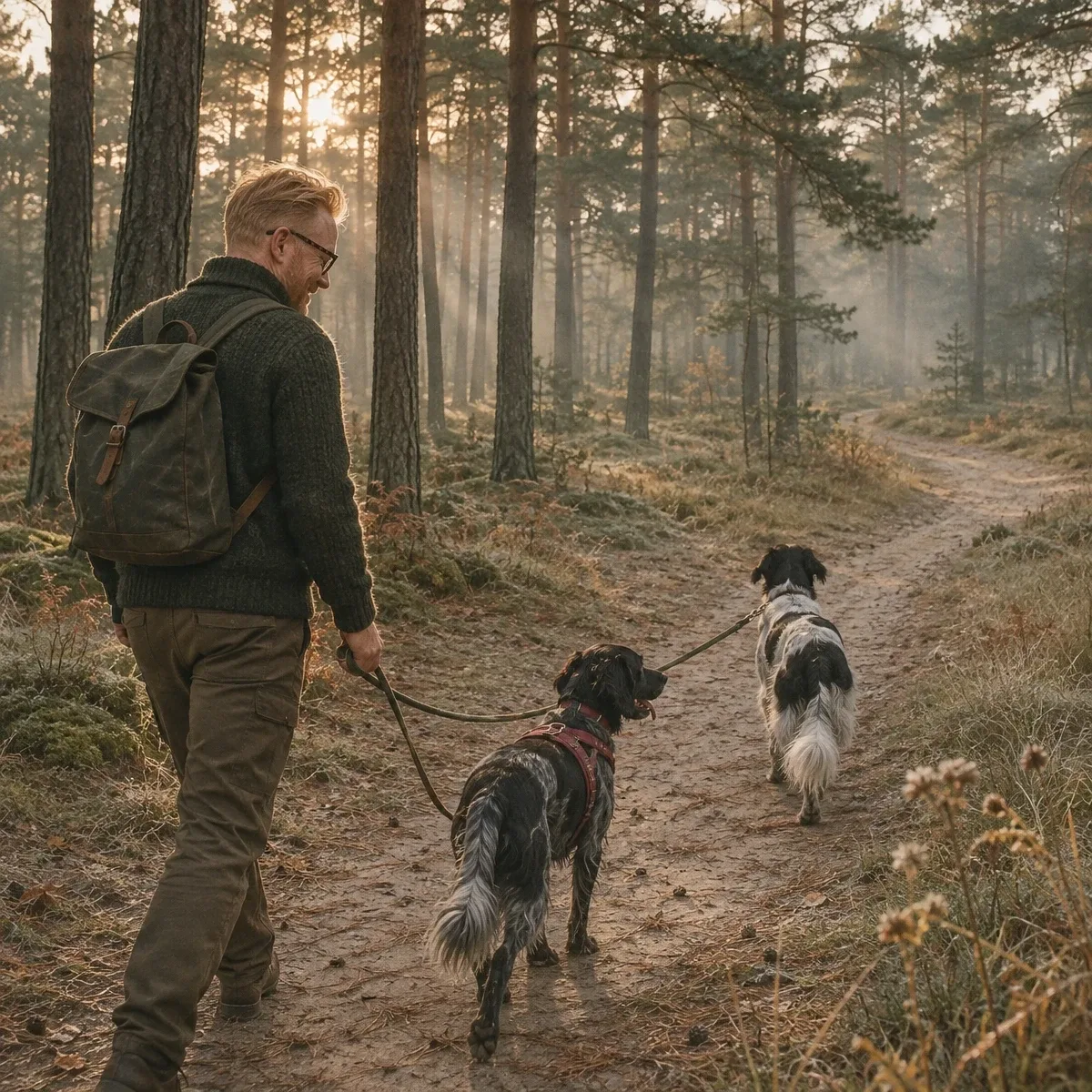
On the walk this morning, ‘product engineer’ stayed with me. I was out with Sien and Fimme in the forest near home in Klosterdorf. It’s Sunday, 8 November 2026. Apparently a dog walk is a good time to work out what to call myself.
It’s a bigger question for me than choosing something to put next to my name. My curiosity about technology and the internet has mostly taken me into hybrid roles. Coding, design, marketing, content creation - I’ve enjoyed all of it, but I’ve never quite found one name for it all. And that uncertainty brings a bit of anxiety with it.
When I can’t explain where my work begins and ends, it’s also harder to decide what to leave alone. Something interests me; I can see how it connects to something else I do, and suddenly there’s another way to stretch myself. I like being curious. I’m less comfortable with the feeling that I should be able to follow every interest far enough to become good at it.
Eva and I have talked about being wonderfully hybrid people. All too often, we stretch ourselves, end up not really being great at anything, and burn out. I’ve had several burnouts myself. I’ve dealt with them and been open about them. Enjoying different kinds of work doesn’t mean I can keep expanding what I expect of myself. It’s uncomfortable to admit that, because I don’t want to lose the curiosity either.
‘Product engineer’ feels useful because it names my interest and gives it boundaries. I can be excited about something without having to make it part of my work. Instead of worrying about missing out, I can focus on building beautiful products. I don’t need to claim every skill that goes into them.
Yesterday I tried ‘product designer’ in drafts. It didn’t fit. The title promises UX or design experience. I know very well what UX and design are good for, but I lack the talent. I’d feel I needed to explain that before we could get to the work.
‘Product engineer’ feels easier to say. The title puts technology first, which suits me, while still saying that I build solutions. I can care about how something works for people without presenting myself as a designer. The word doesn’t make the uncertainty disappear, but it gives me a more useful place to start.
I’m Dutch and have lived in Germany for more than thirteen years. Home is Klosterdorf, in Oberbarnim, Brandenburg. I’m also the product owner for Yorizon’s European sovereign cloud. I’ve struggled to describe my workshop, Casey does IT (CDiT), without making it sound like a collection of things I happen to do.
At CDiT I was already working this way before I had a name for it. That’s a relief. I don’t need to reshape everything around a title or announce that I’m doing something completely different. Mostly I’m trying to stop putting the emphasis in the wrong place, including in my own expectations.
The code gets written. I no longer want to define my role by writing code myself. So what am I responsible for?
I work ‘with, not for’ the people involved. We talk and define the problem together. My responsibility includes deciding what we’re actually building, rather than treating the ability to generate code as a reason to build everything we can think of.
Focusing on the product also moves me away from consultancy and keeps me from drowning in project management.
I prefer a thin, durable layer over tools a client already uses, rather than a new system with its own admin panel. Building on existing tools still feels like worthwhile work.
‘Simplicity is not simple’ is one of my own lines. To me, ‘product engineer’ doesn’t imply that a product has to be big for the work to matter.
Before work starts, I write down what we’re building, plainly enough that the people who live with it can read it. A product nobody can maintain isn’t finished.
The things I’ve already built help me understand what ‘product engineer’ means to me. My daily tools include a fleet of small MCP servers for accounting, notes, images, publishing and tasks.
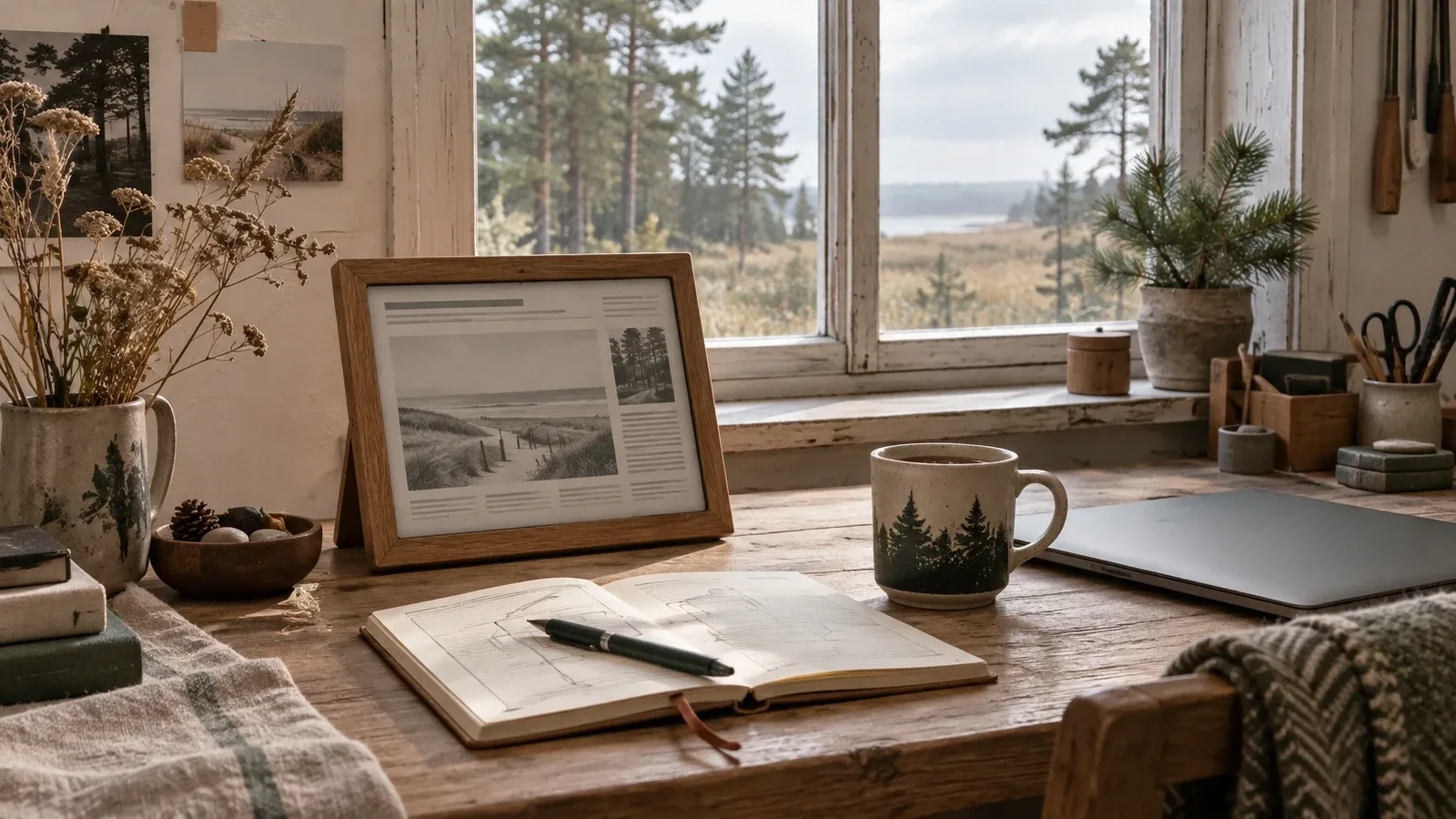
Then there’s the e-paper newspaper on a shelf at home. The design comes first and the logic stays on the server. The newspaper is switched off between editions. There’s also the magic mirror on the wall, code name Hausgeist, and Blippstrom, which makes our whole house smart and stable.
I rebuilt the Klosterdorf village website without charging for the work. There’s also Stolperfalle, open-source memory for AI coding agents. A village website and memory for a coding agent are very different projects, but I recognise the same approach in both. I can keep that variety without turning every project into another professional identity.
This edition of The Brief Pause, my LinkedIn newsletter, sets out where things stand in November 2026. I’m comfortable trying this name without making it a promise that I’ll never need to explain myself differently. For now, having a boundary feels helpful, even if I don’t yet know how well I’ll keep to it.
This piece also exists in German and Dutch, each written separately rather than translated.
I’m wondering what I’ll find easier to leave out when I introduce myself.