
I’m having more and more conversations about the title of this reflection, whether AI makes us ‘dumb’ or not, and I don’t think it’s that simple.
The worry that a new tool will make us stupid is about 2,400 years old.
In Plato’s Phaedrus, Socrates tells the story of the Egyptian god Theuth, who offers King Thamus his newest invention, writing, and Thamus turns it down: “This discovery of yours will create forgetfulness in the learners’ souls, because they will not use their memories; they will trust to the external written characters and not remember of themselves.”
We know about this because Plato wrote it down.
In an earlier post I wrote about the abbot who praised handwriting and then had it printed, and about the printing press, the spreadsheet and desktop publishing: tools that folded several jobs into one person. That post was about risk, and it left me with a bigger question: will AI make us dumber, as a society?
I’ve tried to think it through, and I end up with two answers that point in opposite directions.

The library was open twice a week
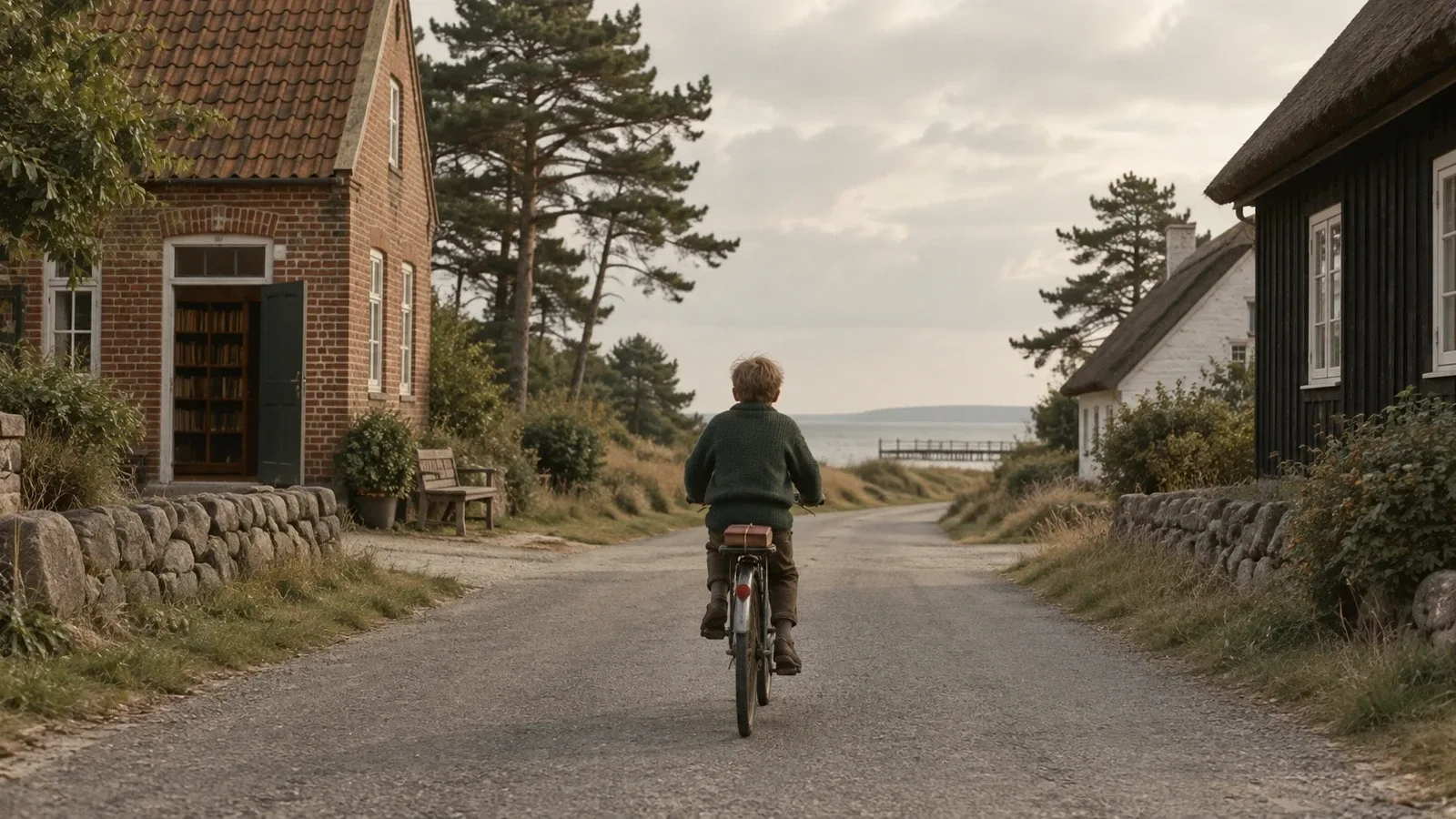
When I grew up, information was something you had to go and get. Our library was open twice a week, so you went, hoped the book was still there and biked it home, and sometimes you found out at home that you’d taken the wrong one.
Then we got the internet, then Google, then broadband that was always on, and now it all sits in the pocket of my jeans.
Games went the same way. A game came with a magazine or in a box from a shop, and nobody downloaded anything. When you got stuck, you called a hotline or looked for the solution in a magazine. Today the hard part is deciding which game to play, or which show to watch.

So the effort moved. It used to go into getting hold of an answer at all, and now it goes into choosing between far too many of them.
Each of us loses something
Thamus had a point, and by now there’s data for it.
In 2011 Betsy Sparrow, Jenny Liu and Daniel Wegner ran four experiments on memory. People who expected to be able to look something up later remembered the thing itself less well, and remembered better where to find it. We store the address and skip the content.
In 1983 the psychologist Lisanne Bainbridge wrote a short paper called Ironies of Automation. Her observation: “physical skills deteriorate when they are not used”, and the operator who has to take over when the automation fails “needs to be more rather than less skilled” than average, because the takeover only happens when something is already wrong.
In 2025 a study at four endoscopy centres in Poland measured exactly that. In the three months after the doctors started working with AI assistance, their detection rate in colonoscopies without the AI dropped from about 28% to about 22%. It’s one observational study, so I wouldn’t build a policy on it. But it’s the result Bainbridge predicted forty years earlier.
And a Microsoft Research survey of 319 knowledge workers found that the more people trusted the AI, the less critical thinking they reported doing. People who trusted their own skill did more of it.
So for the single person I think the answer is yes. A skill you stop using gets weaker, and AI lets us stop using quite a few.

Did we lose the webmasters?
Now the other answer, from a corner I know.
In the late 1990s a website needed a webmaster. That was a person who wrote the HTML by hand, kept the server running and usually fixed the mail as well. Then Dreamweaver arrived in 1997 and let you lay out a page without writing the markup. Hosting companies took over the server, and WordPress came out in 2003 and took over the content management (and, I think, a good share of the work of the people who used to build such systems themselves). Today more than 38% of all websites run on WordPress, according to W3Techs.
Did the webmasters disappear? The job title did. The US Bureau of Labor Statistics counted 220,100 web developers and digital designers in 2025 and expects the number to grow.
What happened is that the knowledge moved. It went into the operations team at the hosting company, into WordPress itself, and into far fewer heads that now serve far more sites. And millions of people who would never have learned HTML got to publish something anyway.
When I moved a WordPress site off shared hosting, the package turned out to bundle five separate services, and on shared hosting you never have to tell them apart, which is what a good abstraction does for you. The average site owner knows less about servers than a webmaster did in 1999. All of us together know a lot more about running websites, and many more of us have one.
The pyramids
Take away our cranes, trucks and diamond saws, and I doubt we could build the Great Pyramid as well as the Egyptians did. They managed it with copper tools, boats and a workforce that Egyptologists put at no more than 30,000. We can’t build one their way, because we don’t fully know what their way was. We have the logbook of an inspector called Merer, found in 2013, who shipped limestone from the quarries at Tura to Giza with about forty boatmen. But how the blocks got up the pyramid is still debated.

So with our machines we can do far more than they could, and their method still got lost. I think that’s the pattern for the whole question.
It doesn’t take 4,500 years either. In the 2000s the United States wanted to refurbish a nuclear warhead and needed a material called Fogbank, last made in the 1980s. According to the Government Accountability Office, the National Nuclear Security Administration (NNSA) “had lost knowledge of how to manufacture the material because it had kept few records of the process when the material was made in the 1980s and almost all staff with expertise on production had retired or left the agency”. Relearning it cost a year and 69 million dollars. (The NNSA says it never forgot the recipe; it had closed the plant and the people had retired. For my point that comes to the same thing.)
In 2013 NASA engineers took apart an F-1, the engine of the Saturn V moon rocket, to learn how it worked. The drawings still existed, but as Ars Technica put it, “each F-1 engine was uniquely built by hand, and each has its own undocumented quirks.”
Knowledge like that lives in the people who practise it. An abstraction lets most of us stop practising, which is what it’s for. The knowledge gets lost when everybody stops.
What’s different about AI
Earlier tools took over the doing: the press did the copying, the spreadsheet did the adding up, PageMaker did the paste-up. Every time, people moved one level up, to deciding what should be printed, calculated or laid out.
AI offers to do that level too. It will happily tell you what the problem is, what to build and whether the result is good. And as I wrote in the abbot post, its output looks the same whether it’s right or wrong. My calculator never had an opinion about what I should be adding up in the first place.
That’s why I take the worry more seriously this time. For the first time, the thing we could stop practising is the judging itself.
In my own workshop I try to keep one rule. Claude does most of the building. I work out what the problem is, and I check what comes back. That last part is the one I’m not handing over, however sure of itself the answer sounds.
What I think happens to work
Nobody can predict where this goes, and I certainly can’t. We’ve put our online world and our working lives in the hands of a few tech companies, and they make a lot of these calls for us (I’m part of that; I wrote this with one of their models). A line from Cibola Burn, the fourth Expanse novel, has stuck with me: “The frontier always outpaces the law.” In the end, work is whatever we accept as the rules of play.
Personally I think the 40-hour week is doomed, and that creativity and entrepreneurship become the human part of the job. I expect a lot of people from Gen Z onwards to run two or three side hustles, simply because they can. They’ll learn so much from working in several contexts, where they can experiment, that they’ll easily outpace their seniors.
If that’s how it goes, they’ll be the best argument that abstraction makes us smarter: people who know less about each layer and can do more across all of them. I think it only works if they’ve done the work by hand in at least one of those contexts, long enough to know what good looks like there.

So, dumber?
Each of us will know less about more things. Together we’ll be able to do more than any generation before us. Both were true for writing, for the press and for WordPress, and I expect both to be true for AI.
Whether that adds up to dumber depends on who keeps the layer below alive. Somebody still has to know how the server works, how the mix is made, how to read the code the model wrote. In the past that sorted itself out, slowly, and sometimes it didn’t (ask the people who had to make Fogbank again). I’d rather we chose it on purpose this time.
Sources
- Plato, Phaedrus, 274c to 275b, translated by Benjamin Jowett
- Betsy Sparrow, Jenny Liu and Daniel M. Wegner, Google Effects on Memory: Cognitive Consequences of Having Information at Our Fingertips, Science, 2011
- Lisanne Bainbridge, Ironies of Automation, Automatica 19(6), 1983
- Krzysztof Budzyń and others, Endoscopist deskilling risk after exposure to artificial intelligence in colonoscopy, The Lancet Gastroenterology & Hepatology, 2025
- Hao-Ping Lee and others, The Impact of Generative AI on Critical Thinking, CHI 2025
- Wikipedia, Adobe Dreamweaver and WordPress, accessed November 2026
- W3Techs, Usage statistics and market share of WordPress, November 2026
- US Bureau of Labor Statistics, Web Developers and Digital Designers, Occupational Outlook Handbook
- Wikipedia, Construction of the Egyptian pyramids and Diary of Merer, accessed November 2026
- Sandrine Ceurstemont, We might finally know how the pyramids were built, BBC Science Focus
- US Government Accountability Office, GAO-09-385, Nuclear Weapons, March 2009; the agency’s reply in the NNSA FAQ on Fogbank
- James S. A. Corey, Cibola Burn, 2014
- Lee Hutchinson, How NASA brought the monstrous F-1 “moon rocket” engine back to life, Ars Technica, April 2013
PASS IT ON.